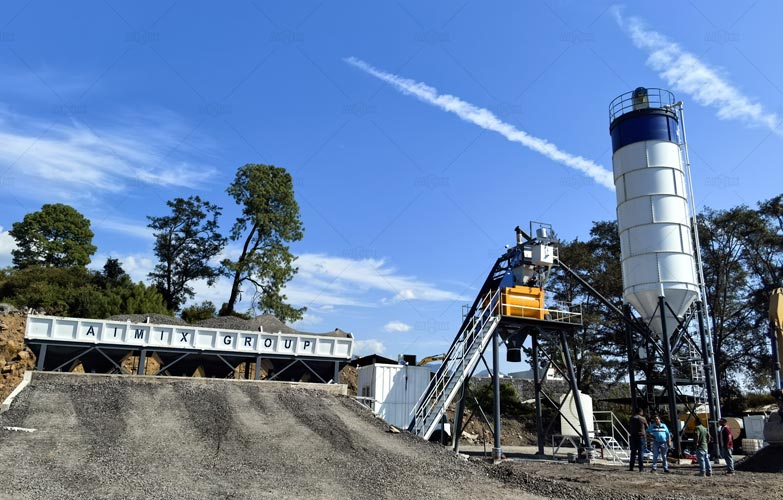
Concrete Production Trends Amidst Latin American Infrastructure Upgrading Wave

AIMIX is a professional mining and construction equipment solution supplier and manufacturer.
Across Latin America, the construction industry is experiencing a period of rapid modernization driven by large-scale infrastructure projects, urbanization, and the push for sustainability. Countries like Peru, Brazil, and Colombia are investing heavily in transportation networks, housing, and renewable energy facilities. In this context, concrete production has become a key enabler of progress — and the evolution of concrete manufacturing technology is reshaping how the region builds.
The growing adoption of concrete plant(planta de concreto) technologies, especially mobile concrete plant solutions, reflects a broader shift toward flexibility, efficiency, and sustainability. As Latin America’s infrastructure ambitions expand, construction companies are rethinking traditional production methods to meet tight schedules, reduce costs, and comply with stricter environmental standards.

The Infrastructure Boom and Its Impact on Concrete Production
Latin America’s infrastructure boom is fueled by both public and private investment. Governments are prioritizing road reconstruction, bridge building, and housing developments to stimulate economic growth and improve connectivity. This has led to a surge in demand for high-quality, ready-mix concrete.
However, this growth also presents new challenges. Many large-scale projects are located in remote or geographically difficult areas — such as mountainous regions in Peru or the Amazon basin — where logistics can complicate traditional concrete supply chains. Transporting concrete over long distances increases costs and risks quality loss due to setting time limitations.
This is why the deployment of on-site concrete plant systems has gained traction. These plants allow contractors to produce fresh concrete directly at the construction site, ensuring consistent quality and reducing reliance on external suppliers.
Rise of Mobile Concrete Plants: Flexibility Meets Efficiency
The mobile concrete plant(planta de concreto movil) is emerging as a game-changer in Latin America’s construction sector. Unlike traditional stationary plants, mobile units can be quickly assembled, disassembled, and relocated from one project to another. This adaptability is particularly valuable in regions where infrastructure development occurs across multiple remote sites.
For example, in Peru, contractors involved in highway and hydroelectric projects increasingly use mobile concrete plant Peru setups to ensure continuous supply without delays caused by terrain or distance. These units integrate advanced batching, weighing, and mixing systems, offering the same precision as stationary plants while delivering unmatched mobility.
Another key advantage is reduced setup time. Modern mobile plants can be installed and operational within a day, minimizing project downtime. They also require fewer workers for operation, which helps contractors cut labor costs — a major consideration in competitive markets.
Technological Innovation Driving Sustainability
Environmental regulations across Latin America are becoming more stringent, pushing the construction sector to adopt cleaner and more efficient production methods. New-generation concrete plant systems now feature energy-efficient motors, automated water recycling, and optimized aggregate dosing technologies. These innovations help reduce carbon emissions and material waste during production.
Digitalization also plays an important role. Many modern plants include smart control systems that automatically adjust mix proportions based on environmental factors like humidity and temperature. This ensures consistency and reduces human error — a critical factor in maintaining structural integrity across large-scale projects.
In addition, mobile units are increasingly being equipped with solar-powered components and low-noise engines to minimize their environmental footprint, especially in sensitive ecological zones such as coastal or forested construction sites.
Concrete Plants as a Competitive Advantage in Latin America
The integration of efficient concrete plant systems is not just a technical upgrade — it’s a strategic move for companies aiming to stay competitive in a fast-evolving market. By producing concrete on-site, contractors gain full control over production schedules, mix designs, and quality standards.
In countries with growing project pipelines like Peru, Chile, and Mexico, having a mobile or semi-mobile production facility can determine whether a contractor wins or loses a bid. Clients now expect partners who can deliver not only speed but also reliability and environmental compliance.
Moreover, as public–private partnerships (PPPs) increase across Latin America, large-scale projects require flexible production strategies. A mobile concrete plant provides that adaptability, ensuring smooth transitions between project phases and minimizing downtime.
Future Outlook: Toward Intelligent and Sustainable Concrete Production
Looking ahead, the next phase of concrete production in Latin America will likely focus on automation, energy efficiency, and integration with renewable materials. Manufacturers are experimenting with low-carbon cements, recycled aggregates, and AI-based production monitoring systems.
For companies operating in developing markets, investing in modern concrete plant or mobile concrete plant solutions is not merely a trend — it’s a necessity. These technologies help balance productivity with sustainability, enabling contractors to meet both economic and environmental goals.
In Peru, the momentum toward greener and smarter concrete production is expected to accelerate as infrastructure projects expand and environmental standards tighten. The evolution of the concrete plant Peru(planta de concreto Perú) market reflects this broader transformation: a region embracing technology to build faster, cleaner, and more responsibly.
Conclusion
Latin America’s infrastructure wave is not just reshaping cities — it’s redefining the standards of concrete production. With increasing investments and sustainability demands, modern concrete plant and mobile concrete plant technologies are becoming indispensable tools for efficient and eco-friendly construction.
From remote highway projects in Peru to urban redevelopment in Colombia and Brazil, the region is entering a new era where mobility, precision, and sustainability form the foundation of progress. Companies that adapt early to these trends will lead the next generation of infrastructure development in Latin America.
Subscribe to unlock premium content
Sed at tellus, pharetra lacus, aenean risus non nisl ultricies commodo diam aliquet arcu enim eu leo porttitor habitasse adipiscing porttitor varius ultricies facilisis viverra lacus neque.