How Long Is the Typical Return on Investment Cycle for a Concrete Batching Plant?

AIMIX is a professional mining and construction equipment solution supplier and manufacturer.
For construction contractors, developers, and investors, purchasing a concrete batching plant is a strategic decision that directly affects project costs, schedule control, and long-term profitability. Unlike short-term equipment rentals, a batching plant represents a capital-intensive investment whose value is realized over time through stable production and cost savings. As a result, one of the most common questions in the construction industry is: how long does it typically take for a concrete batching plant to pay for itself?
In practice, the return on investment (ROI) cycle of a concrete batching plant depends on multiple operational and market variables. From plant type and production scale to local construction demand and regulatory environment, each factor can accelerate or delay capital recovery. For buyers comparing a concrete plant for sale(planta de concreto en venta), understanding these variables in advance is essential for making a financially sound decision.

Typical ROI Timeline for a Concrete Batching Plant
Under normal construction market conditions, the ROI cycle for a concrete batching plant usually falls between 12 and 36 months. Small- to medium-sized plants serving active construction projects often recover investment faster, while large stationary plants designed for long-term commercial supply may take longer but deliver higher lifetime returns.
For contractors working on infrastructure, commercial buildings, or housing developments, owning a batching plant allows better control over concrete quality, delivery schedules, and cost fluctuations. This operational control is often a key contributor to shortening the ROI cycle.
Key Factors That Influence ROI in the Construction Industry
Initial Investment and Plant Configuration
The upfront cost of a concrete batching plant includes more than just the equipment itself. Typical cost components include:
- Mixing system and batching unit
- Aggregate storage and conveying systems
- Cement silos and screw conveyors
- Control system and automation software
- Installation, commissioning, and operator training
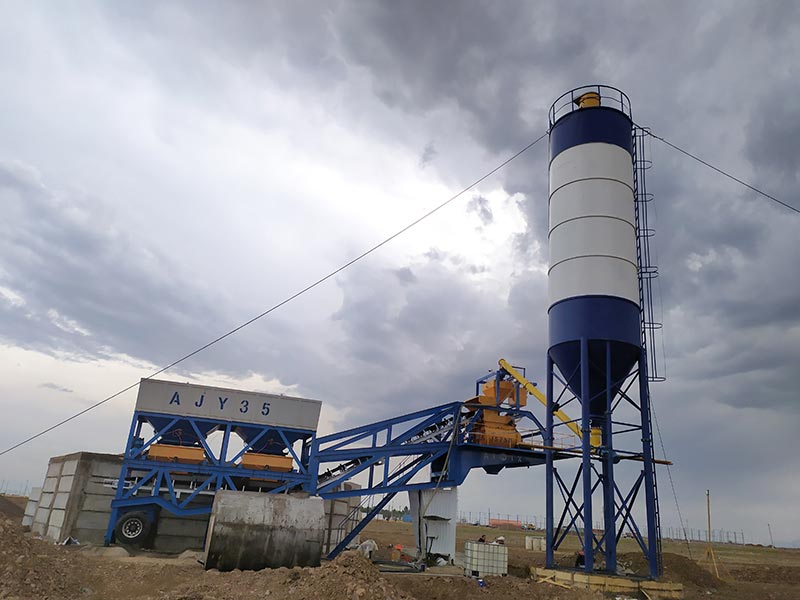
A mobile concrete plant(planta de concreto movil) usually requires a lower initial investment because it minimizes civil works and foundation costs. This makes it especially suitable for temporary construction sites, road projects, or contractors who move between projects. In many cases, mobile plants can achieve ROI in 12–18 months if they are consistently deployed.
Stationary plants, by contrast, require higher capital expenditure but offer higher output stability and lower operating cost per cubic meter when demand is sustained.
Production Volume and Utilization Rate
ROI is closely linked to how much concrete the plant actually produces compared to its design capacity. A common mistake is purchasing an oversized plant that operates far below its potential output.
In construction applications, faster ROI is achieved when:
- The plant operates at least 60% of its rated capacity
- Concrete demand is stable across multiple projects
- Production planning minimizes idle time
Even a modest-capacity plant can outperform a larger one financially if its utilization rate is consistently high.
Concrete Cost Savings Versus Outsourcing
One of the most tangible ROI drivers is the cost difference between self-produced concrete and purchased ready-mix concrete. Owning a batching plant can reduce costs through:
- Lower per-cubic-meter concrete cost
- Reduced dependence on third-party suppliers
- Elimination of price volatility during peak construction seasons
In regions with limited ready-mix suppliers or long transportation distances, these savings can significantly shorten the payback period.
Regional Market Conditions and Their Impact on ROI
Construction Demand and Project Continuity
Markets with strong infrastructure investment and continuous construction activity offer faster ROI opportunities. Roads, bridges, industrial facilities, and public housing projects all create steady concrete demand that supports rapid capital recovery.
Example Market Insight: Concrete Plant Chile
Chile is a representative case where construction demand, mining-related infrastructure, and strict quality standards converge. A well-positioned concrete plant Chile(planta de hormigón Chile) operation serving urban development or industrial construction projects can often achieve ROI within 15–24 months, especially when combined with efficient logistics and local material sourcing.
Stable regulatory frameworks and predictable construction pipelines also help reduce investment risk.
Operating Efficiency and Management Practices
Automation and Labor Efficiency
Modern batching plants equipped with automated control systems reduce labor costs and material waste. Accurate weighing, automated batching, and real-time monitoring improve consistency while lowering operational errors.
Higher automation typically leads to:
- Lower operating costs per cubic meter
- Improved concrete quality and fewer rejected batches
- Faster production cycles
These benefits directly contribute to shorter ROI timelines.
Maintenance and Equipment Reliability
Unplanned downtime is one of the most common causes of delayed ROI. Plants with robust components, standardized spare parts, and preventive maintenance schedules maintain higher uptime and predictable output.
From an investment perspective, slightly higher upfront equipment quality often results in faster payback due to reduced repair costs and production losses.
Mobile Versus Stationary Plants From an ROI Perspective
When a Mobile Concrete Plant Makes More Sense
A mobile concrete plant is often the preferred option when:
- Projects are temporary or geographically dispersed
- Site access is limited
- Fast installation and relocation are required
For contractors handling road construction, remote commercial projects, or phased developments, mobility significantly improves asset utilization, which accelerates ROI.
Long-Term ROI of Stationary Plants
Stationary plants deliver better long-term margins when demand is stable over many years. They are ideal for supplying multiple construction sites within a fixed radius and for commercial ready-mix production.
Although the initial ROI cycle may be longer, total lifetime profitability is often higher.
Practical Recommendations for Shortening ROI
To reduce the return on investment cycle, construction companies should:
- Match plant capacity precisely to realistic demand
- Prioritize utilization rate over maximum output
- Choose plant types aligned with project duration
- Invest in automation and operator training
- Secure long-term construction contracts when possible
Evaluating a concrete plant for sale should therefore go beyond price comparison and focus on how the plant fits the company’s construction strategy.
Conclusion
The typical return on investment cycle for a concrete batching plant in the construction industry ranges from 12 to 36 months, depending on plant type, utilization, market demand, and operational efficiency. Mobile plants often deliver faster payback for project-based construction, while stationary plants offer stronger long-term returns in stable markets.
By carefully aligning equipment selection with construction needs and regional conditions, contractors and investors can significantly shorten ROI and build a more resilient, cost-efficient concrete supply system.
Subscribe to unlock premium content
Sed at tellus, pharetra lacus, aenean risus non nisl ultricies commodo diam aliquet arcu enim eu leo porttitor habitasse adipiscing porttitor varius ultricies facilisis viverra lacus neque.


