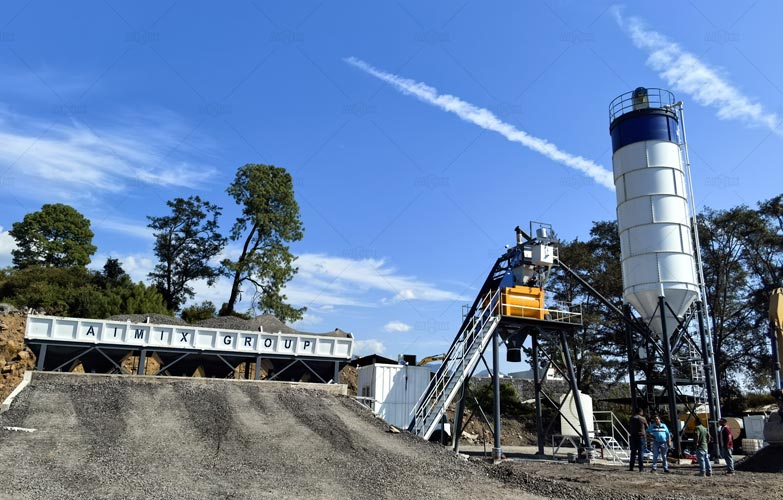
Why Do Road Projects in Brazil, Chile, and Peru Prefer Mobile Asphalt Plants?

AIMIX is a professional mining and construction equipment solution supplier and manufacturer.
From the expansive Amazon basin to the rugged peaks of the Andes and the long, narrow coastal plains, the geography of Latin America presents a unique set of challenges for road construction and maintenance. In countries like Brazil, Chile, and Peru, where infrastructure development is crucial for economic growth and social integration, efficiency and adaptability are not just preferences—they are necessities. This is where the strategic advantage of mobile asphalt plants becomes overwhelmingly clear. Unlike their stationary counterparts, mobile plants(planta de asfalto movil) offer a nimble, cost-effective, and highly responsive solution tailored to the region's diverse terrains, vast distances, and dynamic project demands. Their growing preference is reshaping how ministries of transport and private contractors plan and execute critical infrastructure, turning logistical nightmares into manageable, streamlined operations.

Conquering Geographic and Logistical Hurdles
The topography of these nations is often the first and most formidable opponent for any infrastructure project. This is the primary arena where mobile plants demonstrate their superiority.
Accessing Remote and Rugged Terrain
Many vital road projects aim to connect isolated communities or resource-rich hinterlands. Transporting hot mix asphalt over hundreds of kilometers on winding, unpaved roads from a fixed plant is impractical; the mix would cool, compromising quality. A mobile asphalt plant can be disassembled into modules, trucked to a site near the project, and rapidly recommissioned. This drastically reduces haul distance, ensuring the asphalt is laid while still hot and workable, which is critical for achieving long-lasting pavement density and durability. For an asphalt plant in Peru servicing a mountain highway project, this mobility is often the only feasible option.
Navigating Urban Constraints and Minimizing Disruption
In congested cities or for highway rehabilitation projects, setting up a traditional stationary plant is often impossible due to space limitations, zoning laws, and environmental permits. A mobile plant, with its smaller footprint, can be situated on a closed lane, vacant lot, or at the project's midpoint. This minimizes truck traffic across the city, reducing carbon emissions, public inconvenience, and overall project footprint—a key consideration for projects in metropolitan Santiago or São Paulo.
Economic Efficiency and Project Scalability
Beyond geography, the economic calculus for public and private projects heavily favors the flexibility of mobile setups.
Dramatic Reduction in Haulage Costs
Fuel and trucking costs constitute a massive portion of any paving budget. By relocating the production source to follow the paving front, a mobile asphalt plant slashes these costs. This is especially impactful in countries like Chile, with its extreme lengths, or Brazil, with its continental scale. The savings directly improve project margins or allow allocated public funds to stretch further, covering more kilometers of road.
Ideal for Phased and Smaller-Scale Projects
Not every project requires a massive, permanent production facility. Many involve periodic maintenance, rural road paving, or segmented urban work. Investing in or relocating a full stationary plant for such tasks is economically unviable. Mobile plants, particularly compact drum mix asphalt plant(planta de asfalto continua y discontinua) models, offer the perfect scale. They provide high-quality mix on demand for the project's duration and can then be efficiently moved to the next site, maximizing asset utilization for contractors.
Faster Deployment and Demobilization
Time is money. The ability to quickly set up, commence production, and then dismantle and move allows contractors to respond faster to tenders and complete projects on tighter schedules. This agility is a competitive advantage in a fast-paced market. It also reduces the permanent environmental and social footprint of the construction activity at any given site.
Technical Advantages Suited to Regional Needs
Modern mobile plants are not compromises on quality; they are sophisticated pieces of engineering that meet the specific demands of the region.
Consistent Quality with Modern Drum Mix Technology
The core of most mobile units is a highly efficient drum mix asphalt plant. This design integrates the drying and mixing of aggregates with bitumen in a single, continuous drum, offering excellent thermal efficiency and mix homogeneity. Advanced models feature precise computer-controlled systems for weighing and mixing, ensuring the final product meets strict national and international specifications, which is paramount for ensuring the longevity of roads under varied climatic stresses.
Adaptability to Diverse Material Sources
Projects across different regions may have access to different types of aggregates. A well-designed mobile plant can be adjusted to accommodate variations in aggregate size, moisture content, and composition. This local sourcing of materials further reduces costs and supports local economies, a significant benefit for a project utilizing an asphalt plant in Peru(planta asfáltica de Perú) where aggregate sources can vary greatly between the coast and the highlands.
Energy Efficiency and Environmental Compliance
Newer mobile plants are designed with cleaner combustion systems and effective baghouse filters to control emissions. Their ability to locate closer to the project site reduces the overall carbon footprint of the operation. Furthermore, many models are now capable of incorporating a percentage of recycled asphalt pavement (RAP), supporting the region's growing sustainability goals in public works.
The Future of Mobility in Regional Infrastructure
The trend towards mobile asphalt production is more than a temporary shift; it reflects a deeper change in project philosophy. For the ministries of transport in Brazil, Chile, and Peru, promoting the use of mobile plants can accelerate national paving plans. For contractors, it represents a versatile and profitable asset.
The preference is clear: to build the interconnected, resilient road networks that Latin America needs, the industry is choosing solutions that move as fast as the demands do. The mobile asphalt plant is no longer just an alternative; in many scenarios across these nations, it has become the strategic default—the smart, responsive, and economically sound heart of modern road construction.
Subscribe to unlock premium content
Sed at tellus, pharetra lacus, aenean risus non nisl ultricies commodo diam aliquet arcu enim eu leo porttitor habitasse adipiscing porttitor varius ultricies facilisis viverra lacus neque.