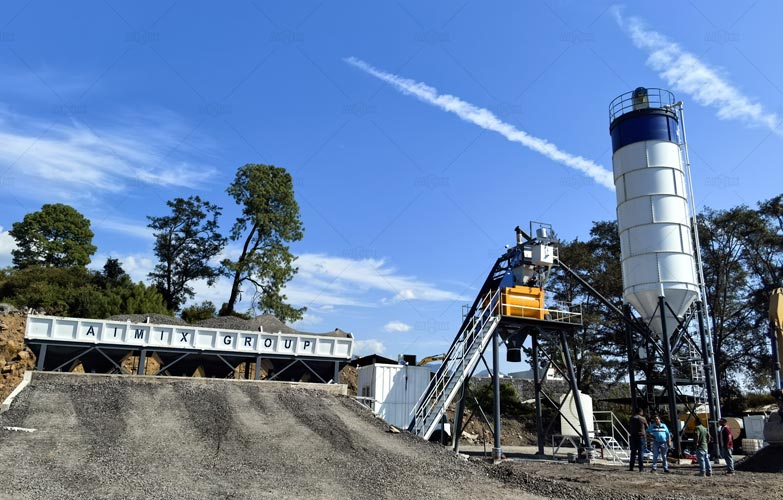
How Mobile Asphalt Plants Can Improve Return on Investment in PPP Projects

AIMIX is a professional mining and construction equipment solution supplier and manufacturer.
In the high-stakes world of Public-Private Partnership (PPP) projects for roads and bridges, financial performance is the ultimate measure of success. Investors and contractors must meticulously manage capital expenditure (CapEx), operational efficiency, and risk to deliver the required infrastructure while ensuring a sustainable return. In this context, the strategic selection of production equipment becomes a critical lever for profitability. Increasingly, the inherent flexibility and efficiency of mobile asphalt plants are proving to be a powerful tool for optimizing the Return on Investment (ROI) in PPP contracts across Latin America and beyond. While the initial price of mobile asphalt plant(planta de asfalto movil precio) equipment requires careful consideration, its deployment model aligns perfectly with the long-term, multi-faceted demands of PPPs, transforming a capital expense into a strategic advantage.

Aligning Mobile Plant Advantages with PPP Project Imperatives
PPP projects are defined by their long-term nature, stringent performance standards, and often, phased or geographically dispersed construction schedules. A stationary plant, while suitable for a single, massive site, can create logistical and financial bottlenecks in this environment. Mobile asphalt plants, particularly modern drum mix asphalt plant designs, offer a set of features that directly address these challenges.
Unmatched Flexibility and Phasing Efficiency
A core feature of PPP projects is their segmentation into different sections or phases, which may not be contiguous. A mobile unit can be relocated—often within a matter of days—to follow the progressing workfront. This eliminates:
- Excessive Haulage Costs: The most significant saving. Transporting hot mix asphalt over long distances is incredibly costly and leads to temperature loss, compromising quality. On-site production slashes haulage fuel, trucking requirements, and pavement wear.
- Idle Time Between Phases: Instead of a stationary plant sitting idle while earthworks or structures are completed on a distant section, the mobile plant is demobilized and moved, keeping it productive and generating revenue.
Reduced Capital Commitment and Improved Cash Flow
The total financial outlay for a mobile setup often compares favorably to establishing multiple stationary plants or relying on commercial asphalt suppliers. When evaluating the asphalt plant price Peru(planta de asfalto Perú precio) market, a savvy investor will find that a single, high-quality mobile drum mix asphalt plant can serve an entire linear project, avoiding the need for duplicate investments. This lowers the initial CapEx, freeing capital for other project needs. Furthermore, the ability to quickly relocate and commence production accelerates revenue generation at each new project segment, positively impacting cash flow.
Enhanced Quality Control and Risk Mitigation
PPP contracts carry strict, long-term quality warranties. Mobile plants enable direct, on-site control over the entire production process—from aggregate grading to mixing temperature. This ensures consistent mix quality that meets exact project specifications, reducing the risk of rejections, rework, and future liability for pavement failure. The shorter time between production and paving also ensures the mix is laid at optimal temperature, a critical factor for achieving specified density and longevity.
A Practical Cost-Benefit Analysis for PPP Bidders
To move from concept to concrete numbers, investors must analyze how the price of mobile asphalt plant equipment translates into tangible project savings and value.
Modeling the True Cost of Hot Mix Transportation
The single largest variable cost in asphalt paving is often trucking. A detailed model should compare:
- Scenario A (Remote Stationary Plant): Includes cost of trucks, drivers, fuel, maintenance, and the "value loss" of cooling mix over distance.
- Scenario B (Mobile Plant): Includes incremental mobilization/demobilization costs but dramatically reduced fleet size and haulage distances.
In most linear PPP projects exceeding 15-20 km, Scenario B demonstrates clear and substantial savings that quickly offset the mobilization costs and contribute directly to the bottom line.
Leveraging Mobility for Competitive Bidding and Future Work
Owning a mobile plant provides a strategic advantage during the PPP bidding phase. It allows for more aggressive and accurate pricing by building in the efficiency savings from reduced transport. Post-bid, it enhances the consortium's credibility by demonstrating a direct control mechanism for quality and schedule. After the PPP project concludes, the asset is not stranded; it can be moved to the next project, whether another PPP, a public tender, or private work, maximizing its useful life and residual value.
Key Considerations for Implementing Mobile Plants in PPPs
Successful implementation requires more than just purchasing equipment; it demands integrated planning.
Selecting the Right Technology: The Drum Mix Advantage
For mobile applications in PPPs, the continuous drum mix asphalt plant(planta de asfalto continua y discontinua) design is often superior. It is generally lighter, more compact, and faster to set up and tear down than a batch plant of equivalent capacity. Its continuous operation is ideally suited to the high-volume, consistent production runs required for highway construction. When sourcing, it’s vital to compare not just the sticker asphalt plant price Peru offers, but the engineering design’s ease of mobility and robustness for repeated relocations.
Navigating Logistical and Permit Planning
Mobility requires foresight. The project plan must include timelines for disassembly, transport, reassembly, and recommissioning at each new site. Route surveys for moving oversized loads and securing necessary transport permits are crucial. Furthermore, each new site must be prepared with a suitable pad, access roads, and environmental controls (like silt fences), though these are typically less extensive than for a permanent facility.
Building an Agile Operational Team
The crew operating a mobile plant must be trained not just in production, but in systematic demobilization and mobilization procedures. Efficiency in these processes is key to minimizing downtime between project phases. Investing in this training ensures the plant lives up to its promised flexibility.
Conclusion: A Strategic Asset for Modern Infrastructure Delivery
For consortiums engaged in PPP road and bridge projects, the decision to invest in a mobile asphalt plant should be framed as a strategic calculation to de-risk operations and enhance ROI, not merely an equipment purchase. While the price of mobile asphalt plant represents a significant line item, its value is realized through continuous operational savings, superior quality assurance, and unmatched project adaptability. By virtually eliminating crippling haulage costs, ensuring mix integrity, and providing an asset that can be deployed across the project lifecycle and beyond, a mobile drum mix asphalt plant transitions from a cost center to a profit center. In the competitive and performance-driven realm of PPPs, such tactical advantages are not just beneficial—they are often essential for delivering investor returns and successful public infrastructure.
Subscribe to unlock premium content
Sed at tellus, pharetra lacus, aenean risus non nisl ultricies commodo diam aliquet arcu enim eu leo porttitor habitasse adipiscing porttitor varius ultricies facilisis viverra lacus neque.